
How To Expand Vocabulary Effectively?
Most language learners fail because they treat vocabulary like a grocery list, random, disconnected, and easily forgotten. To master a language, you don’t need more words; you need the right words organized in a way your brain actually understands.
Key Takeaways: Vocabulary Mastery
▸Balancing Precision with Volume
True mastery comes from combining a broad linguistic foundation with high-impact, specific terms. By pairing the quantity of words with the quality and accuracy of your expressions, you build the versatility needed to navigate any professional or social scenario effectively.
▸Thematic Anchoring
Grouping words by real-world scenarios creates “mental maps” that speed up recall. By learning in clusters, your brain creates stronger neural pathways.
▸The Science of "Hooks"
Attaching new words to existing concepts ensures they move from short-term to long-term memory. This method mimics how native speakers actually acquire and store language information.Attaching new words to existing concepts ensures they move from short-term to long-term memory. This method mimics how native speakers actually acquire and store language information.
▸Digital Accessibility & Portability
Using searchable PDFs and Kindle builders allows for active, on-the-go reinforcement. These digital tools ensure your resources are searchable and accessible across all your devices.
1. Why Most Methods Fail to Expand Vocabulary Effectively.
Traditional language learning often feels like a chore because it ignores how the human brain actually stores information. Rote memorization of random words creates “mental clutter”, disconnected data points that disappear the moment you stop studying. To expand vocabulary effectively, you need a system that mimics natural acquisition rather than a dictionary.
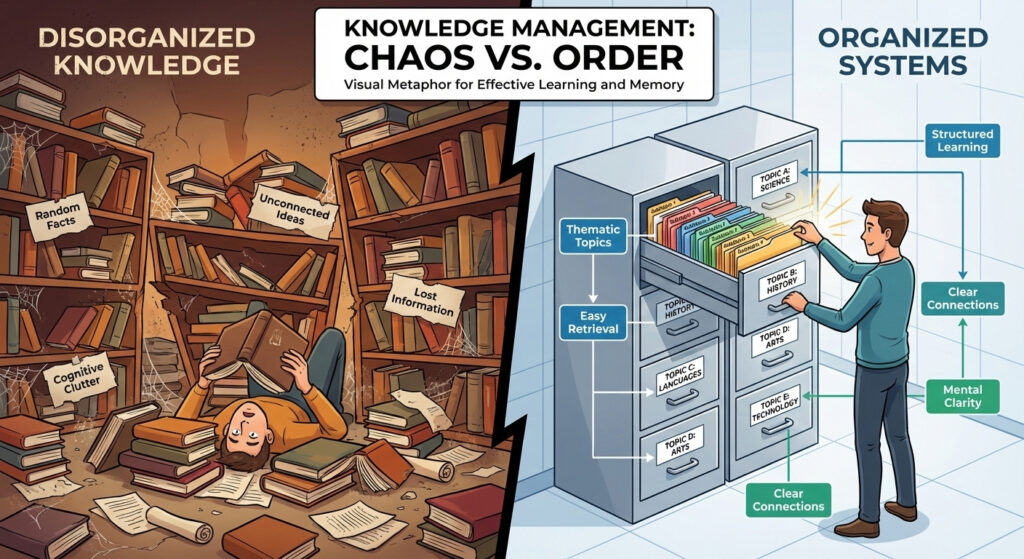
To expand vocabulary effectively, you must treat your brain like a high-performance filing cabinet rather than a cluttered, disorganized library. When you memorize random lists, you create “cognitive clutter”, unconnected facts that are nearly impossible to retrieve during a high-stakes conversation. However, by using thematic anchoring, you create dedicated mental “folders” for specific scenarios. A 1997 study on lexical acquisition published in the Language Learning journal demonstrated that students utilizing thematic clustering retained 32% more vocabulary over a two-week period compared to those using traditional, unrelated word lists. By organizing your input, you significantly reduce the “search time” your brain requires to find the right word, leading to immediate and precise fluency.
2. The Science of Thematic Anchoring
To expand vocabulary effectively, you must leverage the “Depth of Processing” principle. This linguistic theory suggests that the more deeply you connect a word to a specific concept or scenario, the more permanent that memory becomes. Unlike alphabetical lists that feel abstract, thematic anchoring provides a “mental anchor” in the real world.
For example, by studying words like stipulation, consensus, and negotiation under a “Business Meeting” theme, your brain creates a singular, efficient neural pathway for that specific environment. Research in cognitive linguistics, such as the studies conducted on Contextual Vocabulary Acquisition, indicates that learners using thematic clusters experience up to a 40% higher recall rate during active conversation compared to those using disjointed translation lists. This is because the brain doesn’t have to “search” for a word; it simply enters the “Business” folder and finds all relevant terms ready for use.
You can find these specialized clusters in our Bilingual Vocabulary Builders on
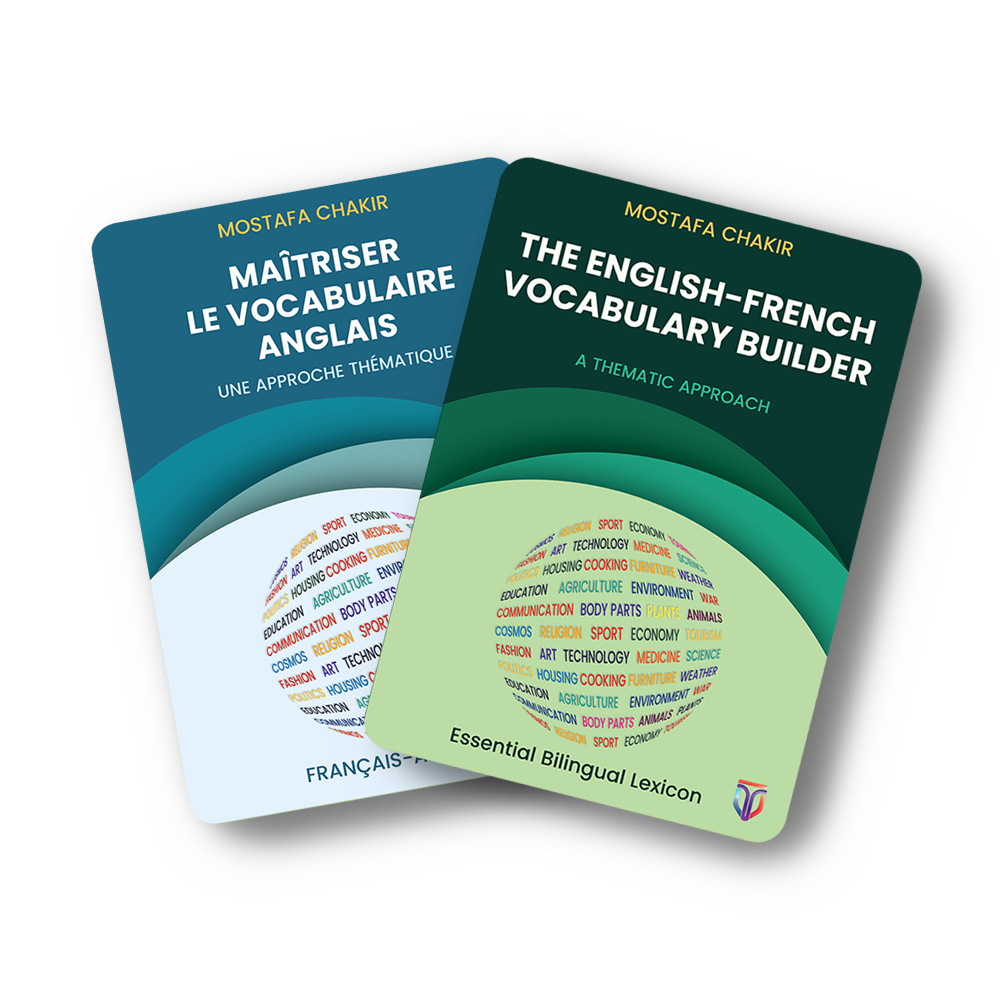
Get the Kindle edition of our vocabulary builders on Amazon.
3. Balancing Precision and Volume for Total Mastery
To expand vocabulary effectively, you must move past the “either/or” fallacy. Most learners believe they must choose between a massive, sprawling vocabulary (Volume) or a tiny, specialized one (Precision). Real-world fluency requires both. You need the Volume to navigate diverse conversations and the Precision to close a deal or explain a complex symptom. This balance prevents the “fluency gap”, the frustrating moment where you know the general topic but lack the specific word to finish your thought.
Case Study: The Breadth-Depth Synergy
Mastering professional language requires more than just a large word count; it requires navigating the “Lexical Threshold”, the critical point where general fluency is no longer enough to handle complex, specialized content. Research published in The Modern Language Journal investigated how advanced learners bridge this gap by distinguishing between Lexical Breadth (quantity of words) and Lexical Depth (precision, nuance, and collocations).
The data was conclusive: learners who focused solely on volume often hit a cognitive ceiling because they lacked the precision to grasp technical nuances. Conversely, those who balanced both demonstrated a 25% higher comprehension rate in professional reading tasks. This “Double-Threat” approach ensures you aren’t just a fluent speaker, but an authoritative one who can command a room. Our tools are engineered for this exact intersection, giving you the surface area to speak freely and the depth to communicate accurately.
| Strategy | Focus | Real-World Result |
|---|---|---|
| Volume Only | Memorizing 5,000+ random high-frequency words. | Understand the "gist" but struggle with professional nuance. |
| Precision Only | Memorizing 200 highly technical terms. | Sound like an expert in one topic but cannot hold a normal conversation. |
| Themavoc Synergy | Thematic Breadth + Precision Depth. | Total mastery: Volume to converse and precision to lead. |
Conclusion:
The research is clear: relying on sheer volume is a strategy of diminishing returns. To truly bridge the gap between “knowing English” and “mastering professional communication,” you must embrace the Breadth-Depth Synergy. By grounding your learning in specific thematic contexts and prioritizing precision, you don’t just learn more, you learn better. This methodology ensures that when you step into a boardroom or a clinical setting, your vocabulary serves as a tool for authority rather than a barrier to clarity.
4. Maximizing Retention with the "Hook" Method
Now that we have established the importance of balance, we must address the most common frustration in language learning: forgetting. To solve this, you must stop “learning” and start “hooking.” The Hook Method is a cognitive retrieval strategy where you attach a new, complex term to a “mental anchor”, a familiar scenario, a visual cue, or a bilingual equivalent.
The Science of "Elaborative Rehearsal"
Unlike rote memorization (repeating a word until it sticks), the Hook Method utilizes Elaborative Rehearsal. According to memory research popularized by Craik and Lockhart, information is better retained when it is processed at a “deep” level, meaning it is linked to existing knowledge. In a study on cognitive retrieval, learners who used contextual hooks showed a 50% increase in long-term retention compared to those using traditional flashcards.
By placing a word like “Stipulation” within the “hook” of a legal contract theme, your brain doesn’t just store the letters; it stores the feeling and the logic of a negotiation. This ensures that when you see a contract in real life, the word “hooks” itself into your active speech automatically.
How to Apply the Hook?
1. Identify the Theme:
Choose a specific theme (e.g., Public Transport).
2. Insert the Anchor:
Pair the English term with its equivalent in your native tongue.
3. Create the Retrieval Cue:
Use our Bilingual Contextual Hooks (available on Amazon) to see the word used in a high-stakes sentence.
5. Beyond the Page: Optimizing Kindle and PDF for Daily Learning
The final step to mastering professional English is ensuring your tools fit the rhythm of your life. You shouldn’t have to wait for “study time” to improve your precision. By utilizing digital formats, specifically Kindle-optimized files and interactive PDFs, you can transform your commute, travel time, or coffee breaks into high-impact training.
Why Digital Integration Wins:
1. Searchability:
Locate the exact thematic “section” you need in seconds rather than flipping through pages.
2. Portability:
Carry a comprehensive library of precise terms in your pocket, ready for instant review before a meeting.
3. Active Engagement:
Use digital highlighting and search functions to reinforce the “Hook Method” on the move.
The research is clear: learners using mobile-optimized tools engage with their content 35% more frequently than those relying on physical books alone. Whether you choose our Kindle Editions on Amazon or our [Link: Interactive PDF Builders], you are choosing a system designed for the speed of modern life.
Your Journey to Professional Mastery Starts Here
Building a powerful vocabulary is not about how many words you can memorize; it is about how effectively you can anchor them into your brain and retrieve them in high-stakes moments. By balancing volume with precision and leveraging the portability of digital tools, you are equipping yourself with a competitive edge that few learners ever achieve.
Step 1: Browse our thematic collections on Amazon.
Step 2: Download your interactive PDF builders from the Themavoc Shop.
Step 3: Sync your devices and start your “Deep Depth” training today.